LUNAR SURFACE HAND TOOLS
Apollo astronauts had many tasks to perform during their brief moonwalks. They erected scientific equipment, made precise observations of conditions on the lunar surface, and collected samples of the Moon’s soil and rocks.Specialized tools for collecting lunar samples were carried to the Moon in the descent stage of the Lunar Module. The tools are made of stainless steel and aluminum.
Displayed here are tools used in astronaut training programs and exact replicas of tools carried on lunar missions..
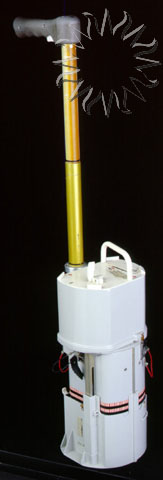
Contingency Sampler With Folding Handle
Used by astronauts to collect a soil sample immediately after they stepped from a lunar module to the surface. This insured that a sample would be returned to Earth even if astronauts had to curtail their surface explorations.
Scongs
Combination scoop-and-tong for obtaining small samples of soil and rocks.
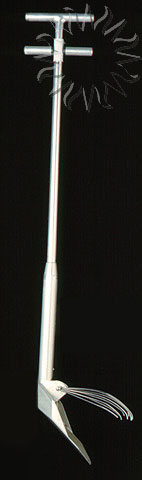
Small Scoop
The small scoop allowed the astronaut to pick up small rocks or small quantities of lunar soil.
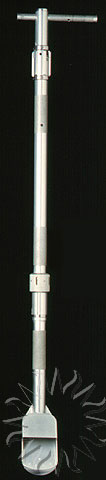
Tongs
The stiffness of the Apollo space suit made bending over difficult, so tongs were provided to aid in picking up rocks and soil.
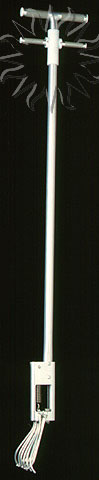
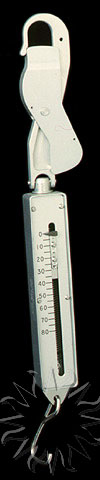
Spring Scales
These spring scales were calibrated for the one-sixth Earth gravity of the Moon and were used to weigh samples. Spring scale A Spring scale B
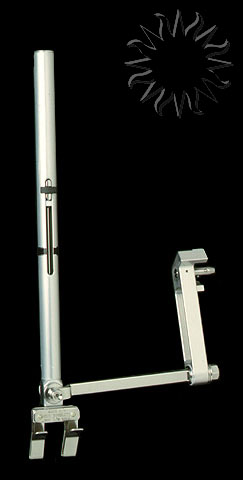
Trenching Tool
This tool was used when a large amount of lunar soil was to be removed from an area.
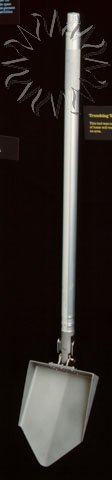
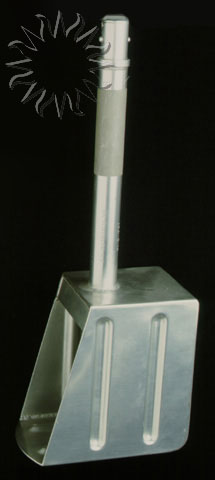
Bulk Sample Scoop
This scoop was used to pick up large quantities of lunar material.
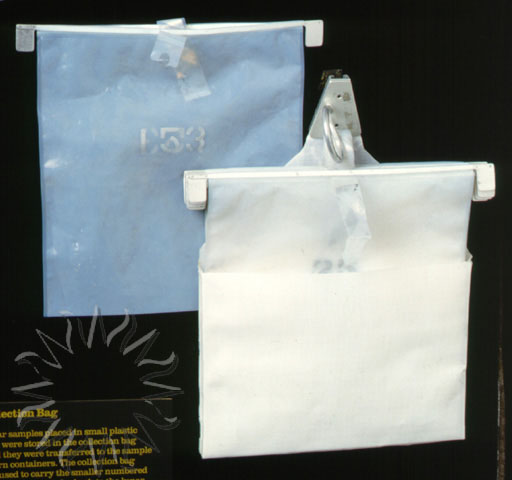
Sample Bags
As the astronauts collected lunar rocks and soil they described the samples to the Mission Control Center and placed them in numbered bags like these.
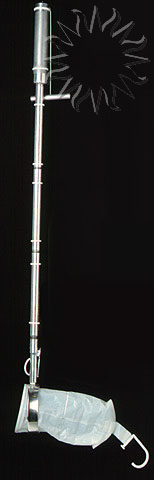
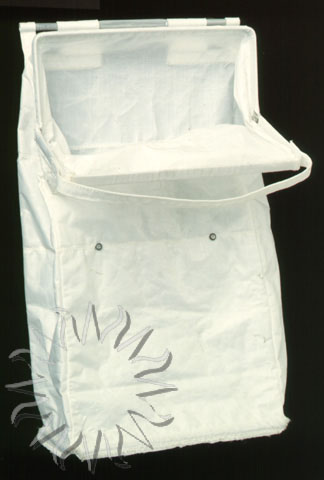
Collection Bag
Lunar samples placed in small plastic bags were stored in the collection bag until they were transferred to the sample return containers. The collection bag was used to carry the smaller numbered bags of lunar samples back to the lunar module.
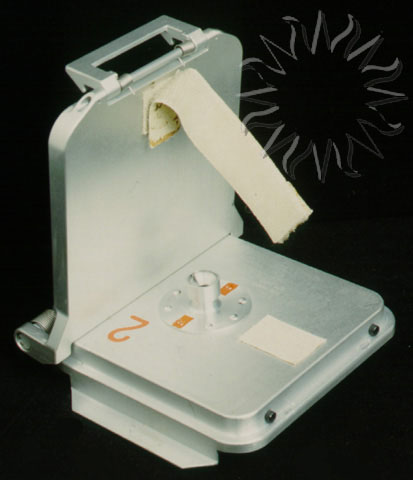
Surface Samplers
These mouse trap-like devices were used to collect samples of soil from the lunar surface. A sampler was attached to an extension handle, opened and pressed down onto the surface. A cloth patch on the face of the sampler would collect the uppermost particles of lunar material from the surface. When lifted from the surface, the device would spring shut, protecting the sample.

Lunar Sample Return Container
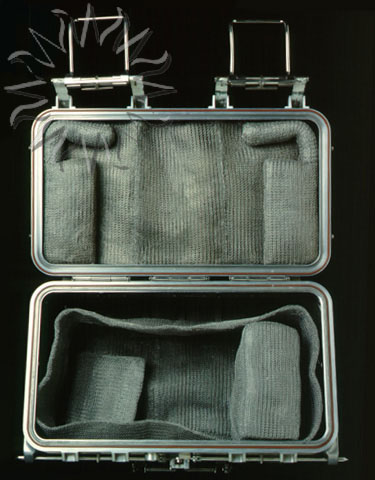
This sample return container, or "rock box" is one of two used by Apollo 11 astronauts to return 21.6 kilograms (47.7 pounds) of lunar material to the Earth following the first walk on the Moon, July 20, 1969. The containers are constructed of aluminum and stainless steel.After an Apollo lunar module (LM) descended to the lunar surface, the astronauts took the sample return containers form a storage compartment in the descent stage. The containers were then filled with lunar material, sealed, and returned to the ascent stage of the LM. The steel mesh pads in the boxes protected the lunar samples from damage during reentry and splashdown.
EXMINE THE MOON
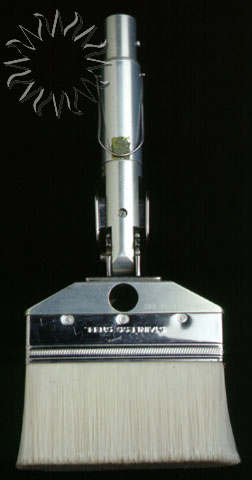
Sample Brush
Rock specimens were cleaned of dust or soil particles with this type of brush.
Penetrometers
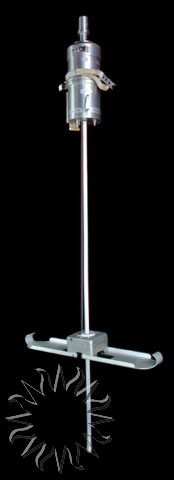
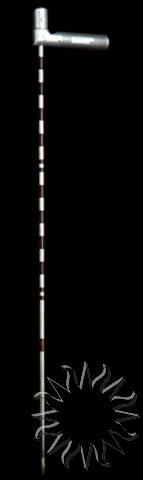
These devices were used to measure the firmness or resistance to penetration of lunar soil. Penetrometer A Penetrometer B
Brush/Scribe/Lens
This multi-purpose tool was used to clean specimens, mark them, and examine them under magnification.
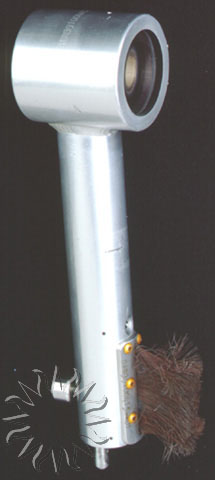
Stereo Close-Up Camera
This type of 35mm camera was used to take pairs of close-up photographs of the lunar surface. When the camera’s base was placed on the Moon's surface and the trigger under the handle pulled, the camera would photograph the area beneath its lenses. The resulting photographs would give a three dimensional or stereoscopic effect when placed in a special viewer.